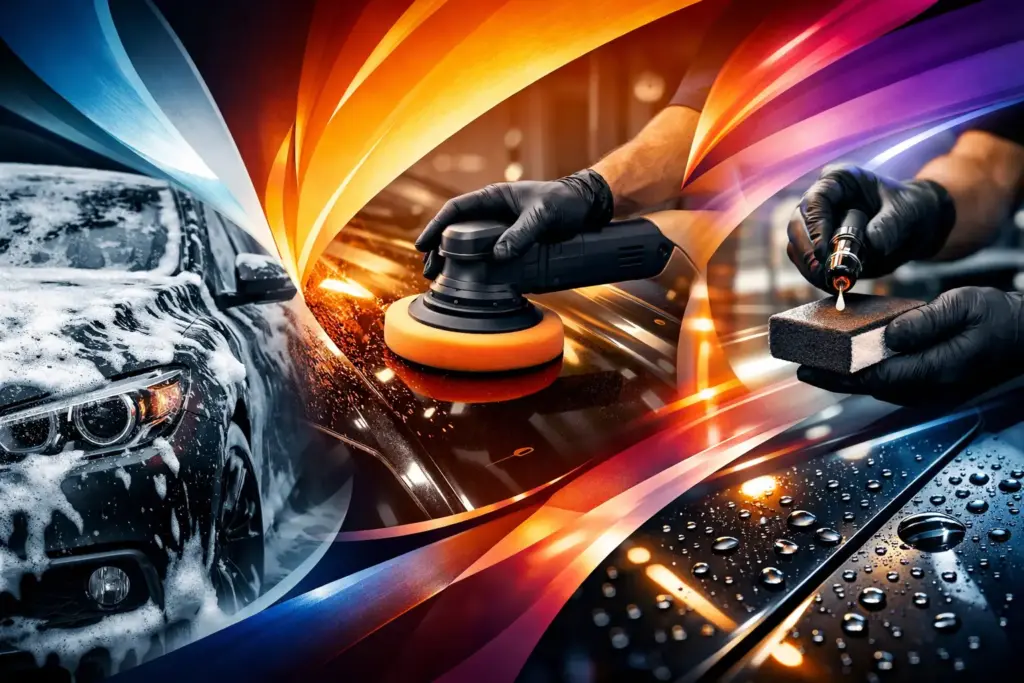
A ceramic coating lifespan is not decided by the number printed on a bottle alone. It is decided by what happens after application: how well the paint was prepared, how the vehicle is washed, how much road salt and traffic film it sees, and whether contamination is removed before it bonds to the surface. A coating can keep paint glossier and easier to clean, but it is not an invisible shield against neglect.
For drivers who deal with winter grime, slush, bug residue, tree sap, and frequent road film, the practical goal is simple: keep the protective layer clean so it can keep doing its job. That means choosing the right wash process as much as choosing the right coating.
How Long Does a Ceramic Coating Last?
Most ceramic coatings fall into broad durability ranges. A spray ceramic or ceramic-infused maintenance product may provide protection for several months to around a year, depending on use and care. Consumer-applied coatings commonly claim one to three years. Higher-grade professional coatings may last three to five years or longer under favorable conditions.
Those numbers are useful for comparing products, but they are not guarantees. A car stored indoors, driven occasionally, and washed with suitable chemicals will usually retain its water behavior and gloss longer than a daily driver parked outside. A work truck, delivery van, or commuter vehicle that runs through salted roads every day has a much harder job for any paint protection product.
Also, durability does not mean a coating looks and performs exactly the same on its final day as it did after curing. The first signs of reduced performance are usually slower water beading, less water sheeting, more dirt sticking to the paint, and a surface that no longer feels as slick after washing. That does not always mean the coating has completely failed. It may simply be covered by mineral deposits, road film, or other contamination.
What Affects Ceramic Coating Lifespan Most?
The condition of the paint before coating is the foundation. Ceramic coatings bond best to a clean, decontaminated, and properly prepared surface. If polishing oils, old wax residue, traffic film, or embedded fallout remain on the paint, the coating is bonding to that contamination rather than directly to the clear coat. The result can be uneven behavior and a shorter service life.
Curing conditions matter too. Coatings need the right temperature, humidity, and cure time specified by the manufacturer. Applying a coating in poor conditions or exposing it to water too early can reduce its durability. Rushing the process is one of the quickest ways to lose the benefit of a product that was otherwise well chosen.
After application, washing habits become the biggest variable. Strong alkaline chemicals, heavy degreasers, and repeated abrasive contact can reduce hydrophobic performance over time. That does not mean effective cleaners should never be used. A vehicle covered in winter film or oily road grime needs proper cleaning. The key is to use the strongest cleaner needed for the contamination, not the strongest cleaner available for every wash.
A good pre-wash and active foam process helps reduce the mechanical contact required during the wash. When loose grit and traffic film are removed before touching the paint, there is less chance of wash-induced marring. Less marring keeps the finish looking better and prevents contaminants from finding rough, damaged areas where they can cling more easily.
Environmental exposure also changes the equation. Road salt, industrial fallout, hard-water minerals, bird droppings, bug splatter, tree sap, and UV exposure all place stress on the surface. Bird droppings and bug residue should be removed promptly because they can etch paint even when a ceramic coating is present. Coating protection buys time. It does not make corrosive contamination harmless.
A Coating Is Protection, Not a Replacement for Washing
The biggest misunderstanding around ceramic coatings is that a coated vehicle does not need regular care. In reality, a coating makes cleaning easier because dirt releases more readily and water carries away more contamination. If the vehicle is left dirty for weeks, the contamination still builds up.
A practical maintenance routine starts with rinsing loose dirt, then applying a suitable pre-wash or active foam. Let the product work for the recommended dwell time without allowing it to dry on the panel. Rinse thoroughly, then use a pH-appropriate car shampoo for contact washing when needed. Drying the vehicle with clean, high-quality towels reduces water spotting and keeps mineral deposits from dulling the surface.
For heavily used vehicles, especially through winter, frequent touchless maintenance washing can be valuable. It removes salt and film before those contaminants become difficult to shift. A contact wash is still needed when bonded dirt remains, but it should not be the first and only step on a dirty vehicle.
Avoid washing in direct hot sun when possible. Heat can cause products to dry too quickly and leave residue. It can also make water spots more likely. If hard water is common in your area, drying is not an optional finishing step. It is part of protecting the coating’s visible performance.
When Water Beading Drops Off
Water beading gets attention because it is easy to see, but beading alone is not a perfect measure of coating health. A dirty coating can bead poorly. Mineral deposits can make it look flat. Road film can hide the hydrophobic layer underneath.
Before assuming the coating has worn away, wash the vehicle thoroughly. Use a pre-wash to remove traffic film, then shampoo the surface with a quality car wash product. If water behavior is still weak, a dedicated contamination-removal step may be needed. Iron fallout, tar, and mineral spotting require different solutions, so identify the problem before reaching for a harsh chemical.
After cleaning, a ceramic-compatible maintenance product can refresh gloss, slickness, and water behavior. This is not cheating or evidence that the original coating failed. It is normal maintenance. A top-up product takes the daily abuse first and can help preserve the base coating underneath.
The trade-off is straightforward: frequent maintenance products add protection and improve appearance, but they do not replace proper decontamination or repair damaged paint. If the clear coat is scratched, oxidized, or etched, more spray protection will not correct the defect.
Ceramic Coating Lifespan by Vehicle Use
A weekend vehicle that is garaged, washed carefully, and protected from harsh weather may meet or exceed a coating’s advertised durability. A daily-driven sedan usually lands closer to the middle of the stated range. Commercial vehicles and high-mileage fleet vehicles may need more frequent maintenance because they encounter more grime, wash cycles, and exposure.
Color can affect what you notice, too. Dark paint makes water spots, wash marks, and loss of gloss easier to see. White or silver paint may hide light marring but still collect road film that weakens water behavior. In both cases, regular pre-washing is more effective than waiting until the vehicle looks visibly dirty.
For a car wash business or a driver maintaining several vehicles, consistency matters more than an elaborate routine used once a season. Keep the process repeatable: remove loose contamination, use the correct wash chemistry, rinse well, dry where possible, and apply a maintenance protectant at sensible intervals.
When Should You Recoat?
Recoat when cleaning and decontamination no longer restore the coating’s behavior, gloss support, or ease of washing. Do not apply a new coating over old contamination, failing residue, or paint defects. The surface should be cleaned and prepared again so the new layer has a proper bond.
If paint correction is needed, polish before coating. If the paint is still in good condition, a maintenance product may be the better value than a full recoat. The right answer depends on how the vehicle is used and what result you expect from it.
The longest-lasting ceramic coating is rarely the one with the boldest durability claim. It is the one applied to properly prepared paint and supported by a wash routine that removes grime without needlessly wearing down the surface.
https://shorturl.fm/EBAZK
As someone who loves thrift finds, well done — hope to read more soon.