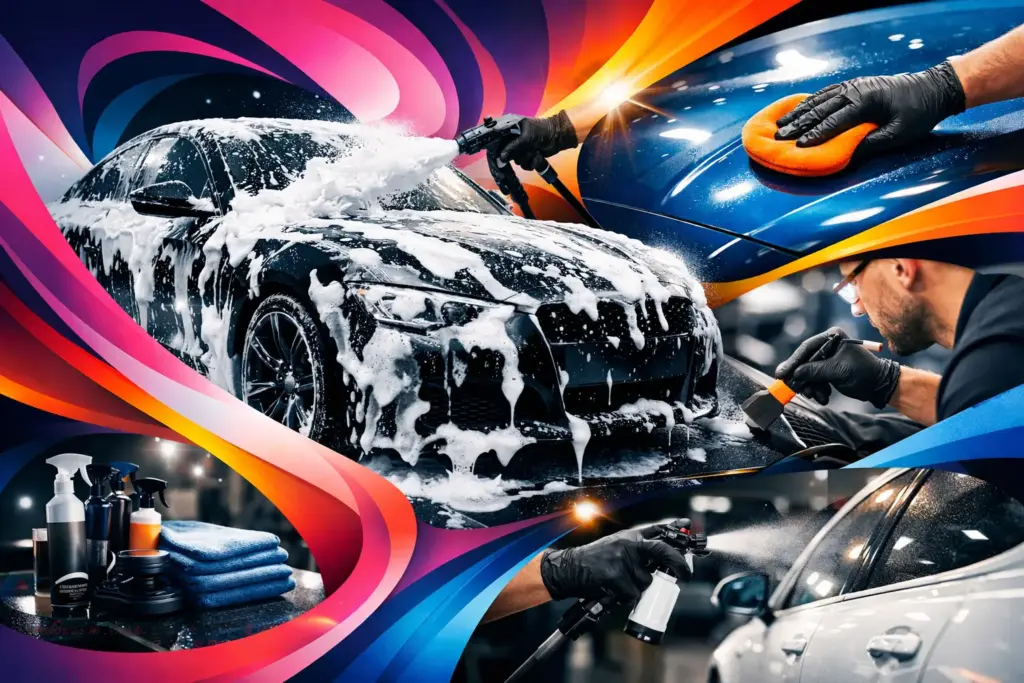
A foam cannon covered in thick white foam can look impressive, but the real test starts when the rinse begins. Searches for aktiivivaahto kokemuksia autopesussa are really about one question: does active foam remove enough road film and grit to make the next wash safer and faster? The answer depends on the chemistry, the dilution, the weather, and the type of dirt on the vehicle.
Active foam is not meant to replace every stage of a proper wash. Its main job is prewash: soften and lift loose contamination before a wash mitt touches the paint. Used correctly, it reduces the amount of abrasive dirt dragged across clear coat, trim, and gloss black panels.
What active foam does well
A quality active foam clings to the vehicle long enough to wet dried dirt and break the bond between contamination and the surface. On a daily-driven car, that usually means road dust, light mud, salt residue, insect remains, and the gray traffic film that builds up around the lower doors and rear hatch.
The best active foam experiences come from realistic expectations. Foam does not need to remove every dark mark without contact. Heavy grime, oily deposits, old bug splatter, brake dust, and winter film can require a stronger prewash product, a dedicated wheel cleaner, or a contact wash afterward.
Thickness alone is not proof of cleaning power. Very dense foam can look satisfying while doing little more than sitting on the panel. What matters is whether the formula stays wet, spreads across contamination, and rinses away a visible amount of dirt without leaving residue. A controlled, even foam blanket is more useful than a mountain of foam that slides off in seconds.
Active foam experiences in car washing: what changes the result
The same bottle can perform very differently from one wash to the next. Water hardness, foam cannon quality, pressure washer output, paint temperature, and dilution all affect the result. That is why two users may give completely different reviews of the same active foam.
Dilution is where most results are won or lost
Too weak a mix produces thin foam with limited cleaning action. Too strong a mix wastes chemical and can be unnecessarily aggressive on sensitive waxes, fresh sealants, or poorly maintained trim. Follow the product’s recommended dilution first, then adjust only when the level of dirt or equipment calls for it.
A foam cannon also dilutes the solution again with water as it sprays. The ratio in the bottle is not always the ratio that reaches the vehicle. If your foam is watery despite using the correct bottle mix, check the cannon’s adjustment setting, pickup tube, filter, and pressure washer flow before blaming the product.
For regular maintenance washes, use a milder solution that removes loose dirt while respecting existing protection. For vehicles covered in salt, wet road grime, or heavy traffic film, use the stronger end of the approved dilution range. The goal is efficient cleaning, not the strongest possible mix every time.
Dwell time matters, but letting foam dry is a mistake
After application, give the foam time to work. In cool, overcast conditions, several minutes may be appropriate. In direct sun, hot weather, or on a warm dark-colored panel, the safe working window can be much shorter.
Never let active foam dry on the surface. Dried chemical residue can create streaks and can be harder to rinse from trim, emblems, panel gaps, and glass. If conditions are hot, work in sections, use more water in the mix if the product instructions allow it, and rinse sooner.
Start from the lower panels and apply upward when you want maximum coverage and dwell time on the dirtiest areas. Then rinse thoroughly from the top down. The rinse should carry loosened grime away instead of redistributing it across the paint.
Winter grime needs more than show foam
Cold-weather road contamination is one of the toughest tests for active foam. Salt brine, slush, oily film, and sand collect heavily behind wheels, along rocker panels, and under the rear bumper. A maintenance foam may soften this layer, but it may not fully remove it in a touch-free wash.
For a heavily soiled winter vehicle, begin with a pressure rinse to remove loose chunks of mud and salt. Apply active foam, let it dwell safely, and rinse at close but paint-safe distance. If a gray film remains, follow with a contact wash using a clean mitt and shampoo. This is not a failure of the foam. It is the correct process for contamination that has bonded to the surface.
A practical active foam wash process
A good prewash routine is simple, but the order matters. Park out of direct sun when possible and make sure the bodywork is cool to the touch. Do not apply foam to a hot hood, hot glass, or panels that have just been sitting in summer sun.
First, rinse the vehicle with clean water. Focus on wheel arches, rocker panels, tires, grilles, and the rear of the vehicle. This removes loose abrasive material before chemical is applied.
Next, apply active foam evenly across the exterior. Cover the lower sections well, since that is where road contamination accumulates. Let the foam work without scrubbing it into the paint. Watch the surface rather than relying on a fixed timer, especially in changing weather.
Rinse every panel thoroughly. Pay attention to mirrors, badges, window seals, fuel doors, roof rails, and the lower edge of the trunk or tailgate. Leftover foam in these areas can drip out later and leave marks.
Then inspect the paint. If it looks clean and feels free of gritty film, you may be able to dry it safely using a clean drying towel or air blower. If contamination remains, continue with a lubricated contact wash. This decision is where active foam saves time: it tells you how much washing the surface actually needs.
When active foam is not the right standalone product
Active foam is an excellent general prewash, but it is not a universal cleaner. Insect residue on the front bumper and mirrors often responds better to a dedicated bug remover. Wheels with baked-on brake dust need a wheel cleaner designed for wheel finishes. Tar spots, tree sap, and iron particles require targeted products and careful technique.
The same applies to engine bays and commercial vehicles. Stronger alkaline cleaners can be useful for greasy surfaces and fleet grime, but they must be selected for the material and rinsed properly. Using a harsher chemical just because a vehicle looks dirty can shorten the life of wax, sealant, or neglected plastic trim.
For protected vehicles, product choice is especially important. Ceramic-coated paint usually benefits from regular pH-balanced foam because it keeps the coating clean without constantly stripping it. Waxed vehicles may need a gentler maintenance routine, while unprotected winter vehicles can tolerate a more assertive prewash when instructions permit.
Choosing active foam for home use or professional volume
Home users usually benefit from a concentrated active foam in a manageable bottle size. It is easy to store, simple to measure, and gives enough product for regular washes. A foam cannon and pressure washer will produce the most consistent coverage, though pump foaming sprayers can also work well for smaller areas, winter touch-ups, and situations without a pressure washer.
For wash bays, detailing studios, transport operators, and resellers, larger containers make more sense when wash volume is consistent. The important comparison is not only container price. Calculate working cost at the actual dilution you use, along with storage space, dosing accuracy, and how reliably the product performs across different vehicles.
ClearShine Solutions focuses its active foam and prewash range around this practical choice: select the cleaning strength and package size that match the job. A daily-driven sedan, a coated enthusiast car, and a salt-covered work van should not automatically receive the same chemical mix.
The result to look for
The most useful active foam experience is not a dramatic social-media photo. It is a vehicle that rinses cleaner, needs less rubbing with a mitt, and dries without hidden residue in the details. When the foam is matched to the dirt level, applied to a cool surface, and rinsed before it dries, it becomes one of the easiest ways to protect paint while making routine washing more efficient.
Treat active foam as the first cleaning step, not a magic shortcut. Use it consistently, adjust it to the season and soil level, and let the condition of the paint decide whether the wash ends after rinsing or continues with a careful contact wash.
Thanks for sharing! What is your take on styling for outfit inspiration?