



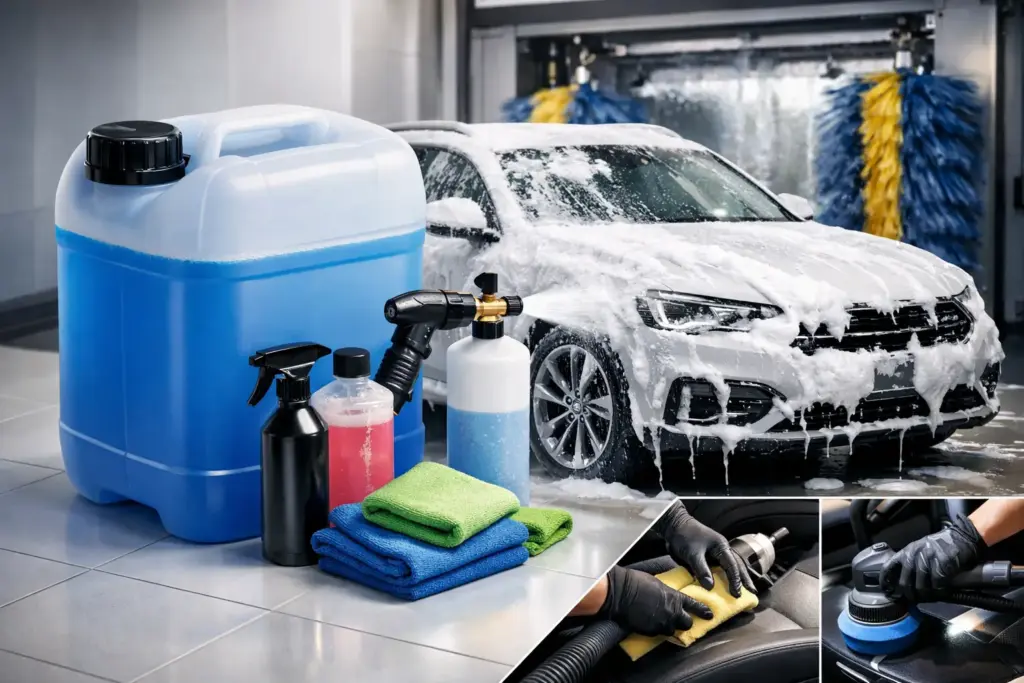
A 20-liter vehicle wash chemical is not simply a larger bottle. It is a purchasing decision that affects wash cost, workflow, storage, and the final result on every vehicle. The search term auton pesuaine 20 litraa usually points to drivers, detailers, and wash businesses that need a product to perform consistently beyond an occasional weekend wash.
For a high-use garage, detailing operation, fleet, or reseller, bulk chemicals can reduce interruptions and lower cost per wash. The key is choosing the right formula for the job. A powerful pre-wash will not replace a lubricating shampoo, and a glossy quick detailer is not designed to remove winter road film. Match the product to the contamination, the application method, and the surface you are maintaining.
When a 20-liter wash chemical makes sense
A 20-liter container is a practical size when you wash vehicles regularly and can use the product before it sits for too long. It works especially well for professional wash bays, dealerships, transport fleets, repair shops, and active enthusiasts who maintain several cars. It also makes sense when the chemical is diluted before use, because one container can produce a much larger amount of ready-to-use solution.
The savings are real only when the product is used correctly. Buying bulk concentrate and then mixing it too strong can erase the cost advantage quickly. Conversely, under-diluting a pre-wash may leave traffic film behind and force unnecessary brush contact. Always treat the dilution ratio as part of the product’s performance, not as a minor detail on the label.
Storage matters as well. A 20-liter container needs a clean, stable location away from freezing temperatures, direct heat, and accidental contamination. Keep the cap closed, use clearly labeled secondary spray bottles, and avoid placing heavy containers where they are difficult to lift safely. A dispensing tap or chemical-resistant pump makes daily use faster and reduces spills.
Auton pesuaine 20 litraa: choose by wash stage
The phrase auton pesuaine 20 litraa covers several types of vehicle-care chemicals. Choosing by container size first is a common mistake. Start with the wash stage you need to improve.
Pre-wash and active foam
Pre-wash chemicals and active foam are designed to loosen heavy dirt before contact washing. They are the right choice for road grime, insect residue, salt, oily film, and the gray buildup that collects on lower panels. Applied through a foam cannon, pump sprayer, or suitable pressure-washer system, the chemical should have enough dwell time to work without drying on the surface.
This is the most valuable stage for reducing swirl marks. When more abrasive dirt is removed before a wash mitt touches the paint, there is less chance of dragging grit across clear coat. However, stronger is not always better. Very alkaline products can be highly effective on neglected vehicles, but frequent use at excessive concentration may reduce the performance of waxes and other temporary protection products. For maintained vehicles, use the mildest dilution that delivers a clean result.
Car shampoo for contact washing
A car shampoo is built for the next step: lubricated contact washing. Its purpose is to carry remaining dirt away while allowing the wash mitt to glide over paint, glass, trim, and wheels. A quality shampoo should rinse cleanly and should not leave behind residue that hides the actual condition of the surface.
For professional use, a concentrated 20-liter shampoo can be a dependable everyday product. It is a better fit than aggressive pre-wash if the vehicle is already lightly soiled or protected with a coating, sealant, or wax. Use a dedicated bucket or dosing system, clean wash media, and plenty of water. The chemical does the cleaning, but correct technique protects the finish.
Wheel, tire, and specialty cleaners
Not every bulk product belongs in every area of the vehicle. Wheel cleaners, tire cleaners, bug removers, glass cleaners, and interior cleaners are formulated for specific contamination and materials. They can be excellent candidates for larger containers in busy shops, but only if the usage volume supports it.
For example, a fleet operator may go through wheel and tire cleaner quickly because brake dust, road salt, and tire browning return constantly. A private owner who washes one vehicle a month may be better served by a smaller container for specialty work while buying pre-wash or shampoo in bulk. Purchase volume should follow actual consumption, not just the lowest price per gallon.
Calculate cost per wash before comparing prices
The container price tells only part of the story. The useful comparison is cost per diluted gallon or cost per vehicle. A concentrate used at 1:100 will go much farther than a ready-to-use cleaner, even if the initial purchase price is higher.
Start by checking the stated dilution range. Then consider how you apply the product. A foam cannon, pump sprayer, bucket, and automatic dosing setup all use chemical differently. The soil level also changes consumption. Winter road salt, muddy rural roads, and commercial vehicles typically require more pre-wash power than a lightly dusty summer vehicle.
A 20-liter container is often the economical option for repeatable wash processes, not for guesswork. Establish a standard mix for routine vehicles and a stronger mix for severe contamination. Mark measuring bottles and sprayers clearly. This keeps results consistent across employees, family members, or multiple wash locations.
Use bulk chemicals safely and efficiently
Bulk containers make it easier to maintain a steady supply, but they require better habits than small consumer bottles. Keep each chemical in its original labeled container until you transfer it into a compatible, labeled working bottle. Never reuse an unlabeled spray bottle, and never mix different chemicals unless the manufacturer specifically instructs you to do so.
Use appropriate gloves and eye protection when handling concentrates. Work in a ventilated area, especially when filling sprayers or foam equipment. If a product is intended for exterior surfaces, do not assume it is suitable for leather, fabric, screens, or sensitive interior trim. Likewise, avoid applying strong cleaners to hot paint, hot wheels, or surfaces in direct sun where the solution can dry too quickly.
Temperature affects results. In cold weather, water and chemicals may dwell differently, while road salt often requires a more thorough pre-wash and underbody rinse. In warm weather, shorter sections and faster rinsing prevent streaking. The right chemical helps, but application timing is what keeps the result clean and controlled.
Build a bulk wash setup that saves time
The most efficient setup separates chemicals by purpose and keeps the routine simple. Pre-wash removes loose and bonded dirt first. Shampoo handles contact washing. A drying aid, quick wax, or polymer-based protectant can then improve gloss and make the next wash easier. Glass and interior products should stay in their own labeled bottles to prevent cross-contamination.
ClearShine Solutions Oy focuses its range around these practical wash stages, from active foam and contact-wash products to protection and finishing chemicals. For buyers using bulk containers, the advantage is having the same product available for repeatable results rather than switching formulas every time a small bottle runs out.
Before committing to a 20-liter container, confirm that you have the right equipment, storage space, and regular demand. If you do, bulk vehicle wash chemicals can turn a slower, inconsistent cleaning routine into a controlled process with predictable cost and visible results. The best place to start is the stage where your current wash routine falls short, then choose the formula and dilution that solve that problem without adding unnecessary effort.