



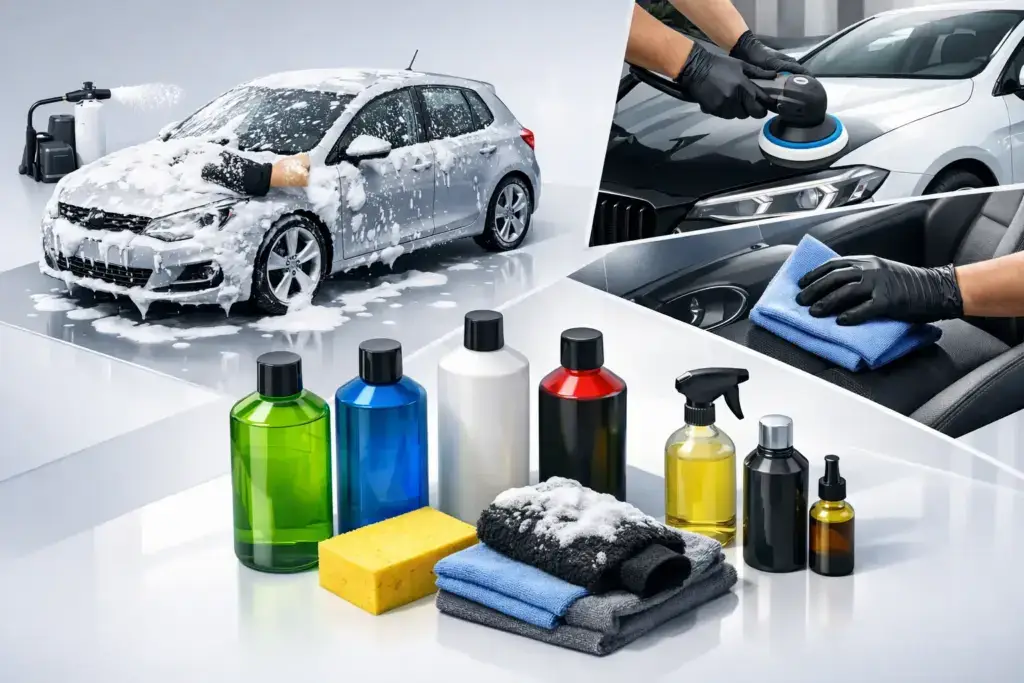
A clean car can still look dull if the wash process leaves fine scratches behind. That is why the search for parhaat autoshampoot käsinpesuun is not really about finding the strongest cleaner. For hand washing, the best shampoo is the one that removes remaining road film safely, provides enough lubrication for the wash mitt, rinses cleanly, and fits the condition of the vehicle.
A hand-wash shampoo works after pre-wash has already done much of the heavy lifting. This distinction matters, especially in climates where salt, wet grit, insect residue, and traffic film build up quickly. Shampoo should support safe contact washing, not replace proper pre-wash or force you to scrub embedded dirt from the paint.
What makes a hand-wash shampoo worth buying?
The best car shampoos for hand washing balance cleaning power and surface safety. A shampoo that feels powerful because it strips everything from the paint may be useful for a specific deep-cleaning job, but it is not automatically the right choice for weekly maintenance. On the other hand, a very mild shampoo may preserve an existing wax, sealant, or coating but struggle if the vehicle has not been pre-washed properly.
Start with lubrication. When you move a wash mitt across paint, there should be a slick layer between the mitt and the surface. Good lubrication helps reduce friction and gives loose dirt a better chance of moving into the wash bucket instead of being dragged across the clear coat. This is one of the most valuable benefits of a quality shampoo, even though it is less visible than thick foam.
Foam is useful, but it is not the whole story. A rich foam makes it easier to see where shampoo has been applied and can help the mitt glide consistently. Still, foam alone does not prove cleaning performance or paint safety. A product should also rinse without leaving a stubborn film, especially on glass, trim, and panel gaps.
The final factor is compatibility with existing protection. If the vehicle has wax, a polymer sealant, or a ceramic coating, choose a shampoo intended for regular maintenance. A neutral or protection-friendly formula is normally the practical option. If the goal is to remove old protection before polishing or applying a new coating, a stronger preparation wash can make more sense.
Parhaat autoshampoot käsinpesuun depend on the job
There is no single shampoo that is best for every vehicle, season, and wash routine. The right product depends on how dirty the car is, how often it is washed, and what is already on the paint.
Maintenance shampoo for protected paint
For a regularly washed vehicle with wax, sealant, or coating, use a pH-balanced maintenance shampoo with good lubrication. It should remove normal dust and light traffic film after pre-wash without aggressively affecting the protective layer. This is the right category for enthusiasts who wash often and want consistent gloss rather than an overly harsh clean every time.
A maintenance shampoo is also a sensible choice for newer vehicles and darker paint colors. Dark paint makes wash marks more visible, so a slick formula, a clean mitt, and careful technique matter more than chasing maximum detergent strength.
Stronger shampoo for neglected surfaces
A vehicle that has gone through winter roads, long highway trips, or infrequent washing may need more than a mild maintenance formula. In this situation, start with an effective pre-wash or active foam to loosen contamination before touching the paint. Then use a shampoo with enough cleaning ability to deal with the remaining film during contact washing.
The trade-off is simple: more cleaning power can reduce the life of weaker wax layers. That is not necessarily a problem if you plan to reapply protection afterward. It becomes a problem only when a strong wash is used routinely on a car that needs its existing protection preserved.
Shampoo with gloss or protection additives
Some shampoos include gloss enhancers or polymer-based protection additives. These can be useful when you want a quick visual improvement during maintenance washing. They may add water behavior, surface slickness, or a brighter finish, particularly on a car that already has a sound base layer of protection.
However, these formulas are not a substitute for dedicated paint protection. They are best viewed as maintenance support. If the paint is unprotected, oxidized, or heavily contaminated, correct cleaning and a separate protective product will give a more durable result.
Use shampoo as part of a safe wash sequence
Even the best shampoo cannot compensate for poor preparation. The wash process determines whether the result is clean and glossy or clean with fresh swirl marks.
First, work on a cool surface out of direct sun whenever possible. Hot paint dries products too quickly and can leave water spotting. Rinse the vehicle thoroughly, then apply an appropriate pre-wash product or active foam. Allow it to work according to the product instructions, but do not let it dry on the surface. Rinse from the lower panels upward if you need to re-wet the chemical, then perform the final rinse from top to bottom.
Only after loose contamination has been removed should you begin hand washing. Use a clean, high-quality microfiber wash mitt rather than a worn sponge. A mitt can hold shampoo solution while pulling dirt away from the paint more effectively. Keep a separate mitt or brush for lower panels, wheels, and areas behind the tires, where abrasive grime is most concentrated.
Use the shampoo at the recommended dilution. Adding extra concentrate may create more foam, but it does not always improve lubrication or cleaning. It can also make rinsing slower and waste product. For professional operations and high-volume users, correct dilution is especially important because it controls both wash quality and cost per vehicle.
Wash from the top downward in straight, overlapping passes. Roof, glass, hood, and upper door panels are generally cleaner than rocker panels and bumpers. Rinse the mitt frequently in a separate rinse bucket or under running water before returning it to the shampoo solution. This step is simple, but it significantly reduces the amount of grit that stays in the mitt.
Do not confuse shampoo with pre-wash
One of the most common hand-washing mistakes is using shampoo to remove heavy road dirt. If you need pressure and repeated passes with the mitt to remove grit, the car was not pre-washed enough. That puts the paint at risk.
Pre-wash chemicals and active foam are designed to soften and release dirt before contact. Shampoo is designed to clean the surface safely after that dirt has been removed. For vehicles driven daily through rain, slush, or salted roads, this two-stage approach is usually more effective than using a stronger shampoo alone.
At ClearShine Solutions Oy, the practical approach is to choose products by task: pre-wash for heavy contamination, hand-wash shampoo for safe contact cleaning, and a suitable finishing product for gloss and protection. This keeps the process clear whether you wash one personal car on the weekend or maintain a working fleet.
Choose packaging based on real usage
A small bottle is practical for occasional home washing and lets you test how a formula fits your routine. Larger containers make better sense for frequent washers, detailing businesses, repair shops, and fleet operators. The important calculation is not only the container price. Compare the recommended dilution, number of washes, and how consistently the product performs.
A concentrated shampoo can offer strong value when measured accurately. Use a marked measuring cup or dosing bottle instead of estimating by eye. Consistent mixing gives repeatable foam, lubrication, and rinsing, which is exactly what professional users need when several people wash vehicles using the same products.
The finish starts with drying
After the final rinse, do not allow the vehicle to air-dry if you want a clean finish. Minerals in water can leave spotting, especially on dark paint and glass. Use a clean microfiber drying towel and blot or glide it gently over the surface. A drying aid or quick-detailing product can improve towel glide and add a final boost of gloss, but it should be applied sparingly and only to a properly cleaned surface.
The best hand-wash shampoo is the one that fits a disciplined process: effective pre-wash, clean tools, correct dilution, gentle contact, and careful drying. Get those steps right, and the paint stays cleaner, glossier, and easier to protect every time you wash.